 Historic Nafplio 3D
Places of historic Nafplio
96 places in the old town of Nafplio and around it: the fortresses of Palamidi, Akronafplia and Bourtzi, squares, churches, monuments, museums and historic buildings. Each page tells the place's history and opens it on the 3D map.
Fortifications
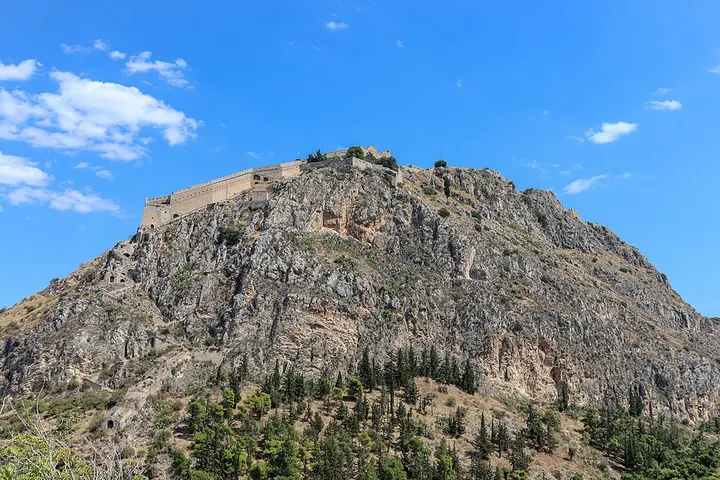 PalamidiEarly-18th-century Venetian fortress crowning the 216 m hill, made of eight self-contained bastions; one of the finest works of fortification architecture in the eastern Mediterranean.
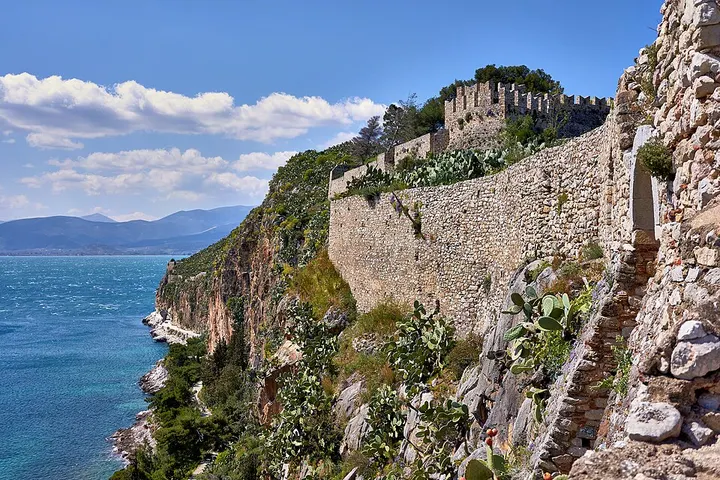 AkronafpliaThe rocky peninsula above the old town was ancient and medieval Nafplio, holding three successive castles: the Romeiko (Greek), the Frankish and the Castle of Toro.
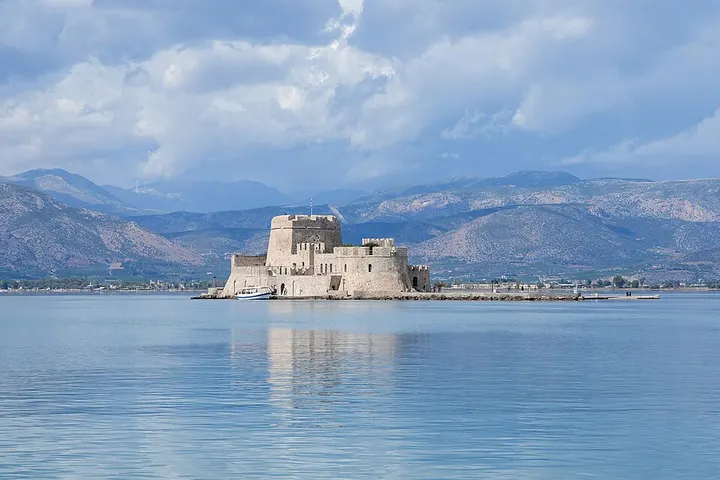 BourtziThe islet fortress in the middle of the harbour, a 15th-century Venetian work that closed the port entrance with a chain; it can now be visited by boat.
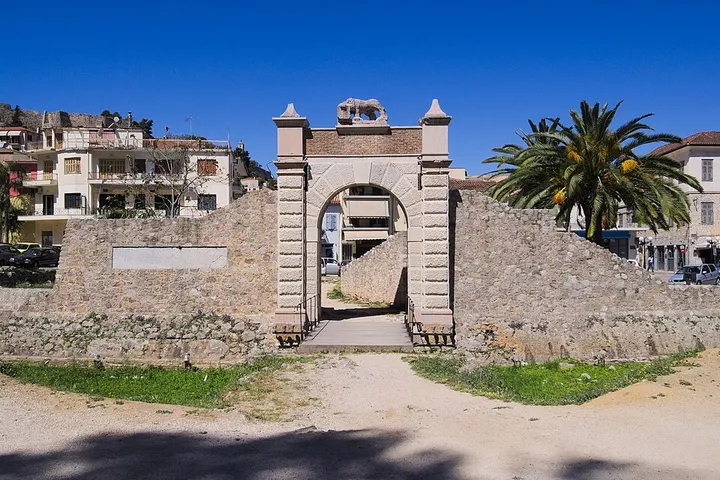 Land GateThe only landward entrance to the Venetian lower town. It was demolished in 1894–97; today its outer face stands rebuilt, crowned by the lion of St Mark.
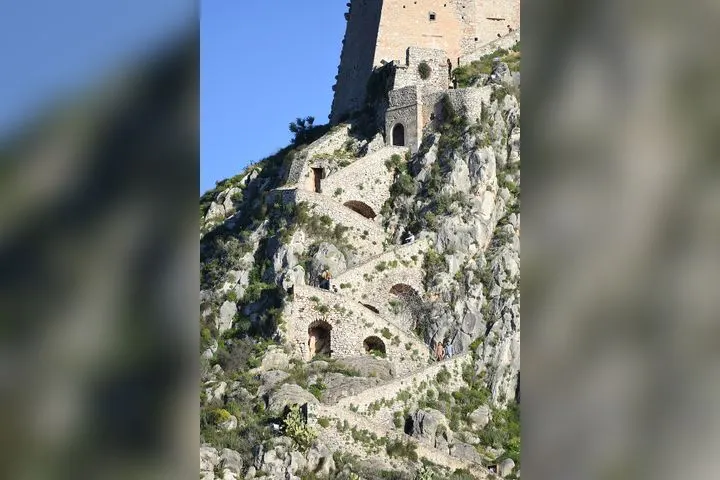 The "999" stepsThe stone stairway from Staikopoulos Park up to Palamidi. Tradition says it has 999 steps, but the real number is lower; 857 is the figure usually quoted.
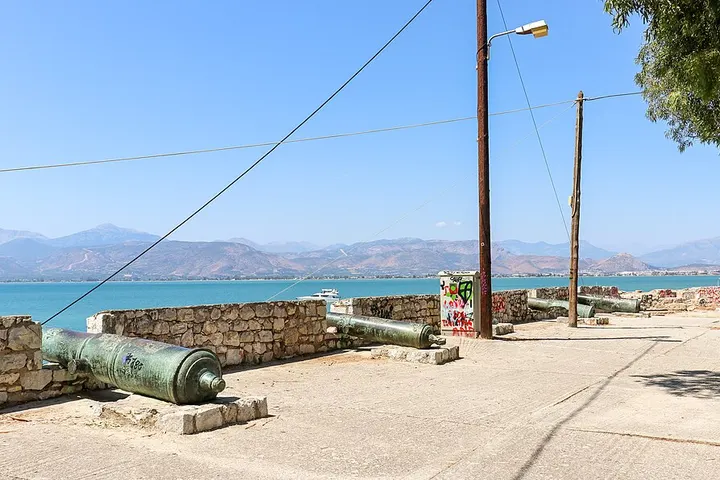 Five Brothers bastionVenetian seaside bastion at the north-west foot of Akronafplia, the only bastion of the lower town to escape demolition. It is named after five identical cannons.
- Ancient walls of AkronafpliaLarge polygonal blocks at the foot of the later walls on the west side of Akronafplia: the oldest visible fortification in Nafplio, from the late 4th century BC.
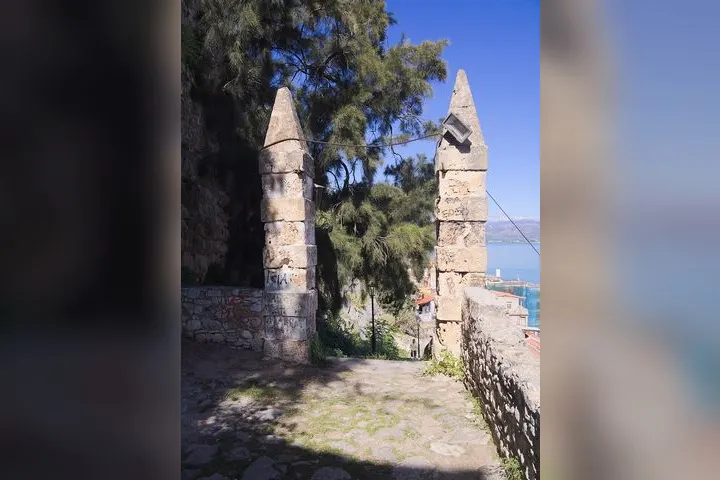 Sagredo GateVenetian gate of 1713 on the north side of Akronafplia; with a broad stair it gave a short cut from the lower town up to the castle. It is currently closed.
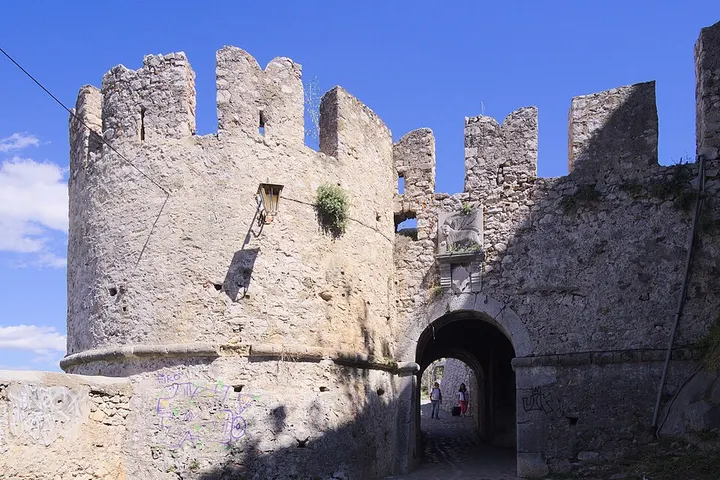 Toro GateThe north gate of the Castle of Toro, the lowest and easternmost of Akronafplia's three castles; the stepped street up from the lower town ends here.
- Porta MarinaA small gate in the walls beside the Five Brothers bastion, through which the fishermen of Psaromachalas went down to the sea and their boats.
- Epaminondas bastionSmall bastion guarding Palamidi's main gate; visitors enter the fortress here today, next to the car park.
- Robert bastionSmall, tower-like bastion at the western end of Palamidi; anyone climbing the stairway from the town enters through its gate.
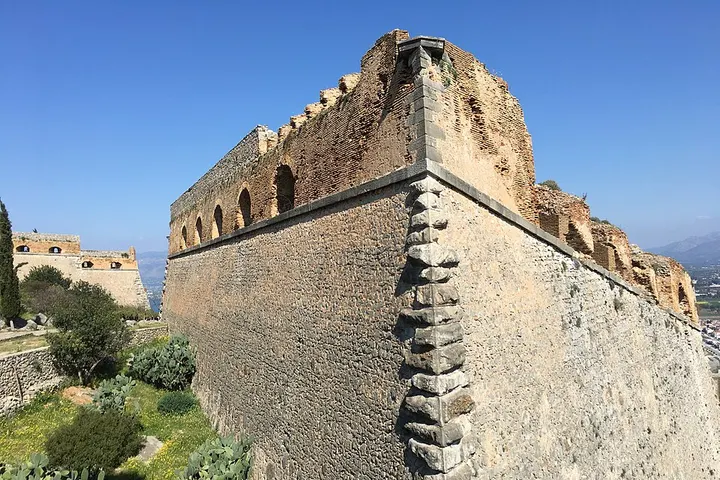 Miltiades bastionPalamidi's strongest and most self-contained bastion, with walls up to 22 m high. After liberation it became a prison for long-term convicts.
- Phocion bastionBastion south of St Andrew's, with a cistern and barracks; its construction is attributed to the Ottomans.
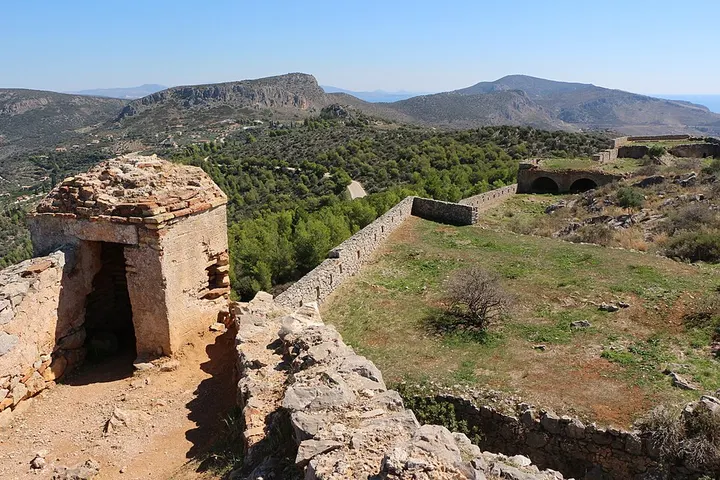 Achilles bastionSouth-eastern bastion on the easiest approach to the hill, Palamidi's 'Achilles heel'. The Ottomans broke in here in 1715, and the Greeks in 1822.
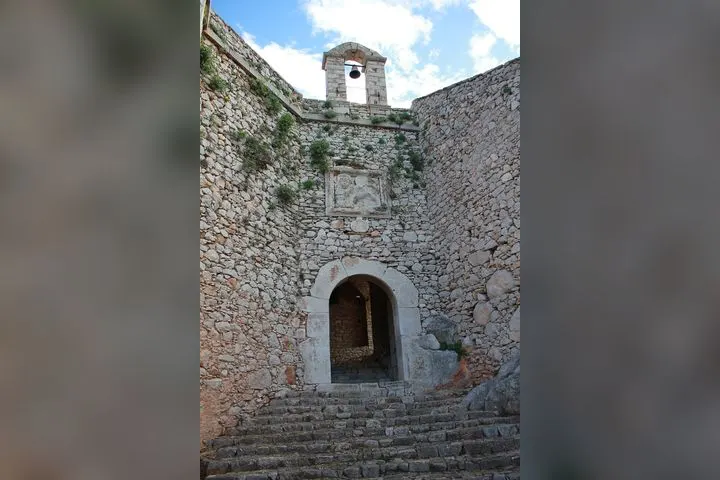 St Andrew bastionPalamidi's central and earliest bastion, seat of the commander. Over its gate is the lion of St Mark with an inscription of 1712.
- Leonidas bastionPalamidi's easternmost bastion, protecting the town from the side of the Argolid plain.
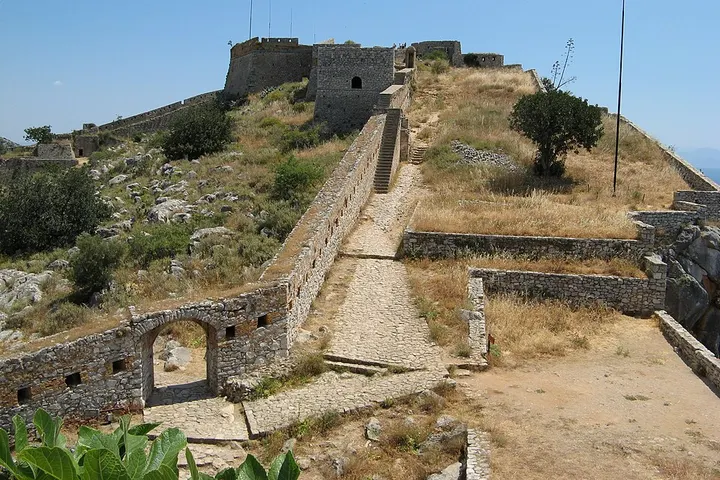 Themistocles bastionLarge bastion on the hill's second-highest summit, between the Phocion and Achilles bastions, with moats on both sides.
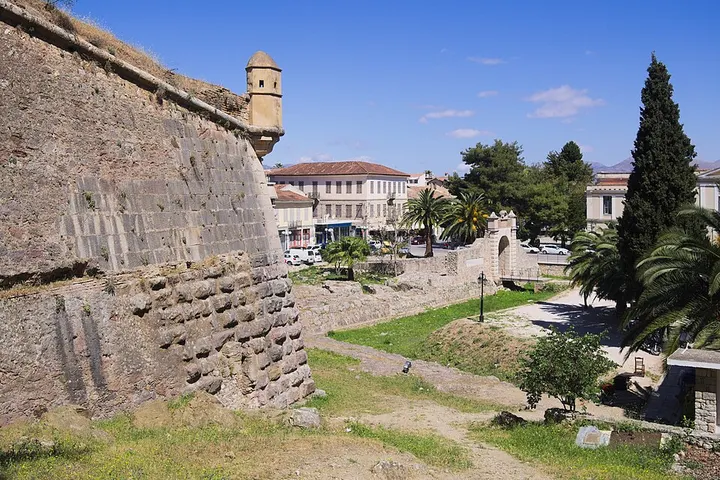 Grimani bastionVenetian bastion of 1706 at the north-east corner of Akronafplia, above Staikopoulos Park, built to cover the Land Gate.
Squares and parks
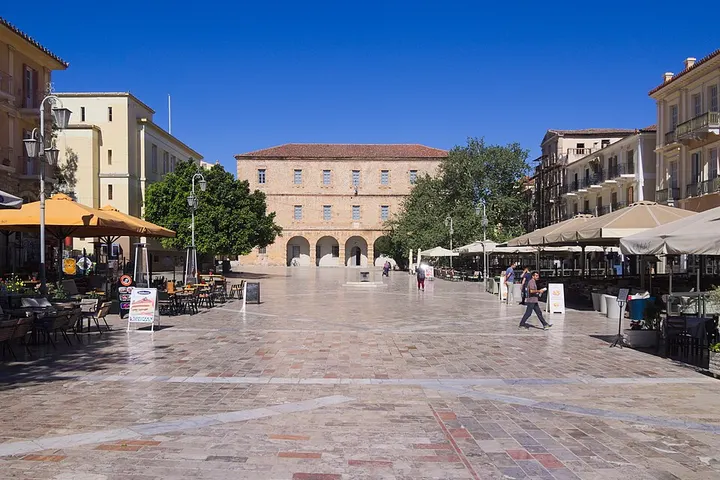 Syntagma SquareThe main square of the old town, laid out by the Venetians and renamed after the 1843 revolt that forced King Otto to grant a constitution.
- Arvanitia SquareAn open space between Akronafplia and Palamidi, above Arvanitia beach, with the bust of the long-serving mayor Dimitrios Sagias.
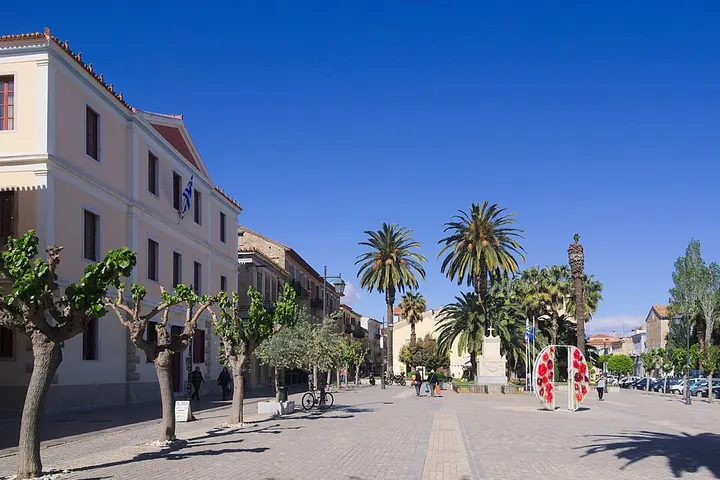 Three Admirals SquareA Kapodistrian-era square at the entrance to the old town, named after the three admirals who won the Battle of Navarino.
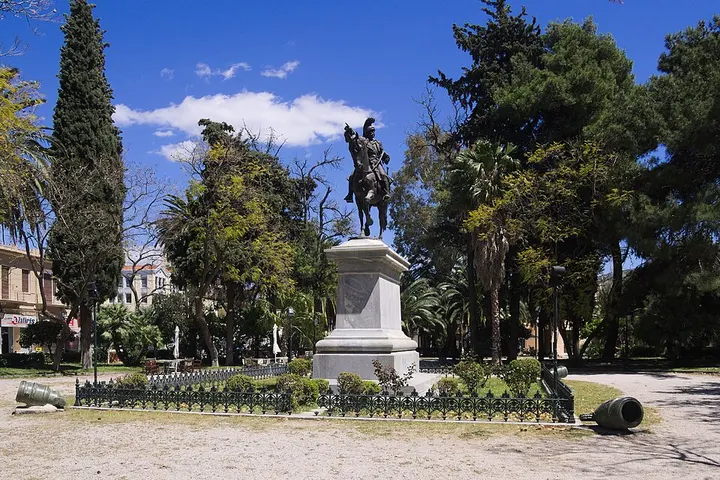 Kolokotronis ParkA park just outside the old town, also called the Botanical Garden, around the equestrian statue of Theodoros Kolokotronis (1901).
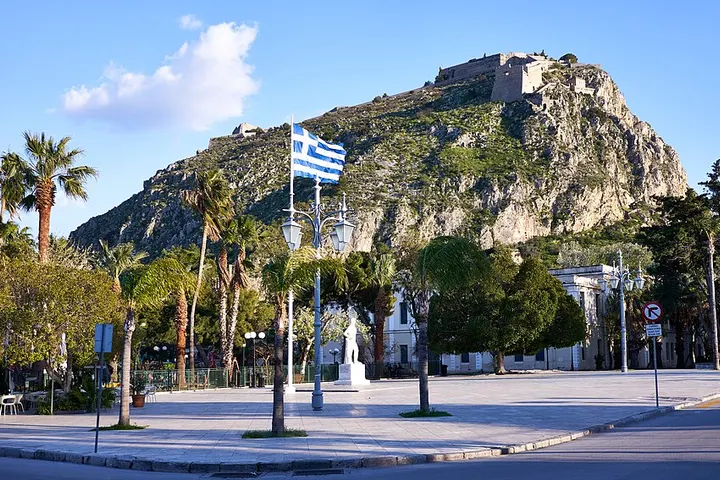 Kapodistrias SquareA square at the entrance to the old town, on the site of a Venetian bastion, with the marble statue of Greece's first Governor.
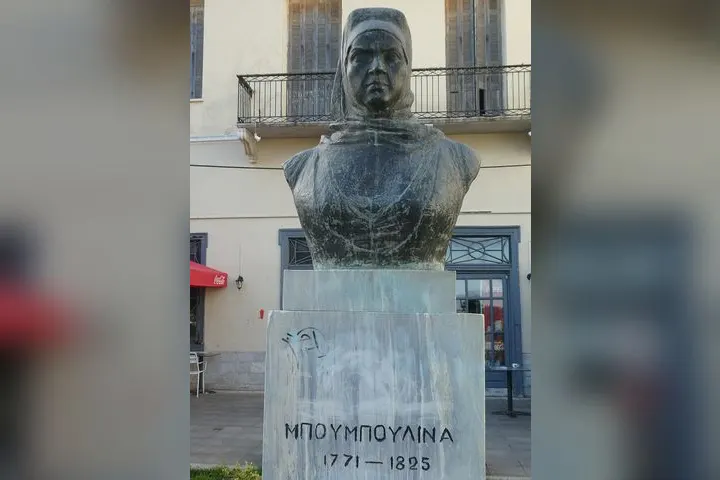 Bouboulina SquareA small square near the harbour, on land reclaimed from the sea, with the bust of the revolutionary heroine Laskarina Bouboulina.
- Nikitaras SquareA square with the Court House and a monument to Nikitaras, the 'Turk-eater' hero of the 1821 War of Independence.
- Evelpidon SquareA small square in the old town beside the site of the first Evelpidon Military School (1828–1834), now the War Museum.
- National Assembly SquareThe central square of Pronoia, where in summer 1832 the National Assembly met and ratified Otto's election as king.
- Civil Hospital SquareA square above the old fishermen's landing, where the first hospital for the poor stood from 1394 until the late 1940s.
Monuments
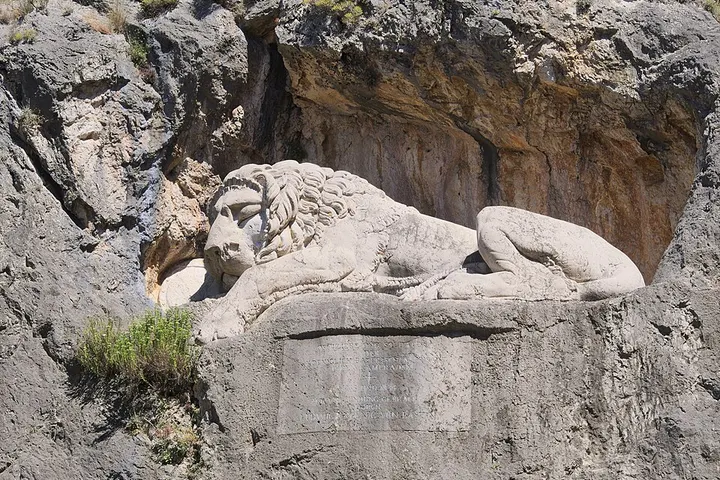 Lion of the BavariansA lion carved into the living rock at Pronoia, in memory of King Otto's Bavarian soldiers who died of typhus in 1833–1834.
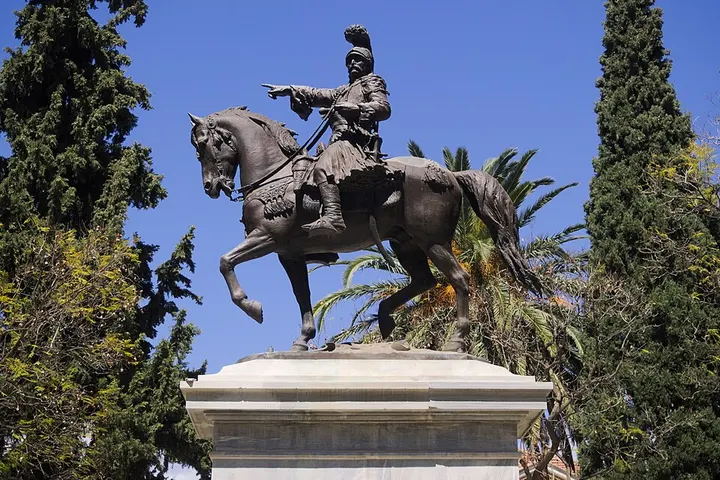 Kolokotronis equestrian statueLazaros Sochos's bronze statue of Theodoros Kolokotronis on horseback, the first equestrian statue put up in the modern Greek state (1901).
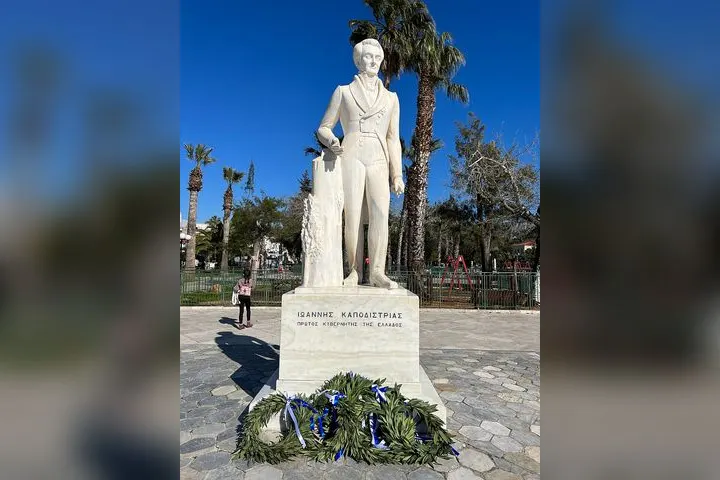 Kapodistrias statueMichalis Tombros's marble statue of Ioannis Kapodistrias, the first Governor of Greece (1932), in the square named after him.
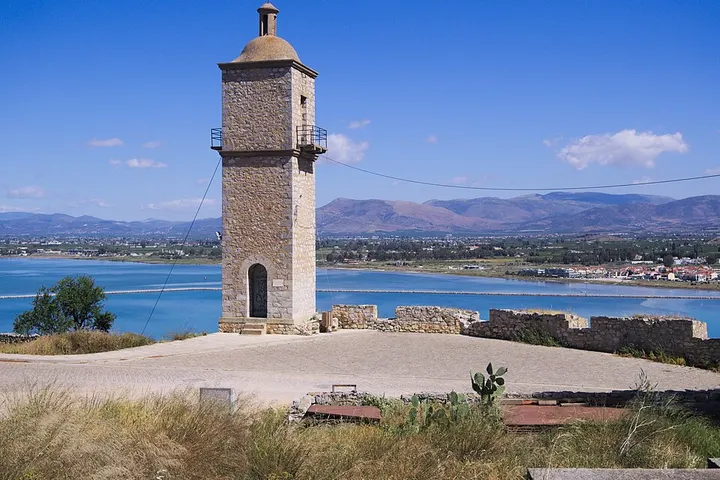 Clock towerNafplio's landmark clock on the northern edge of the Frankish castle of Akronafplia. Blown up by the Germans in 1944, it was rebuilt in 1949 with its original mechanism.
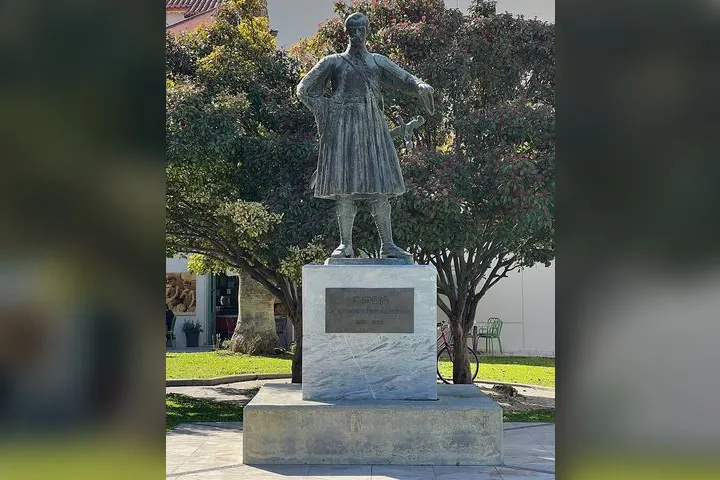 King Otto statueNikolaos Dogoulis's bronze statue of Otto, the first King of Greece (1833–1862), dressed in a foustanela (1994).
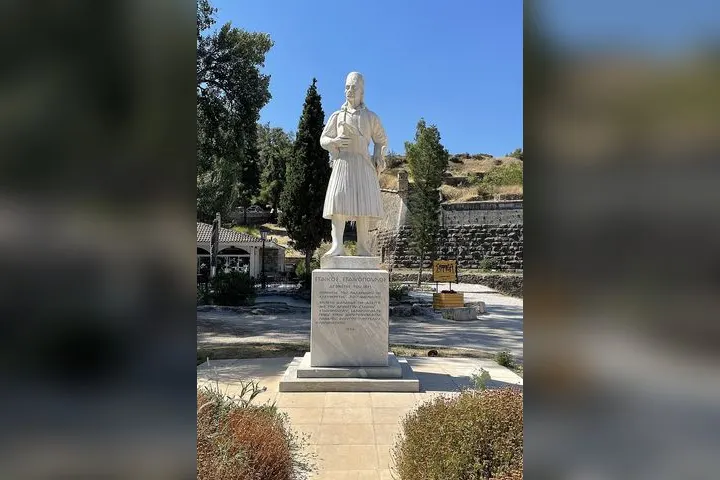 Staikos Staikopoulos statueA marble statue of Staikos Staikopoulos, the fighter who captured Palamidi in 1822, in the park named after him.
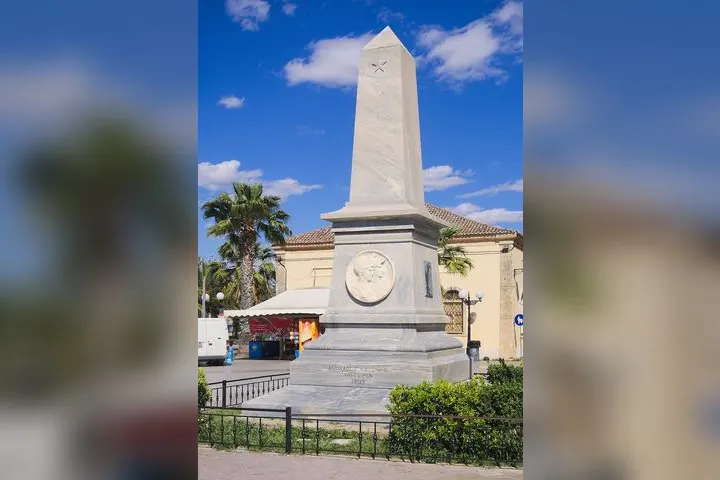 French Philhellenes memorialA marble obelisk in Philhellenes Square, dedicated to the French who fought for Greek independence (1903).
- Mycenaean cemetery of Pronoia (Evangelistria)Rock-cut Mycenaean chamber tombs at the foot of Palamidi, around the Evangelistria church: the burial ground of Bronze Age Nauplia.
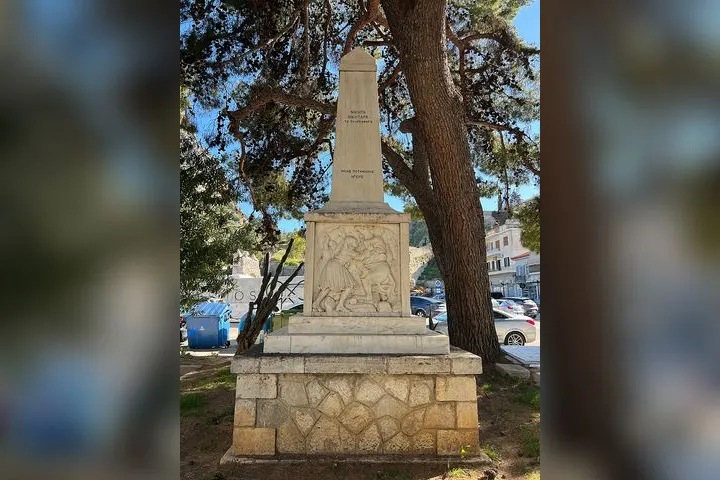 Nikitaras monumentA marble obelisk with a carved battle scene, honouring the 1821 fighter Nikitaras, in the square named after him by the Court House.
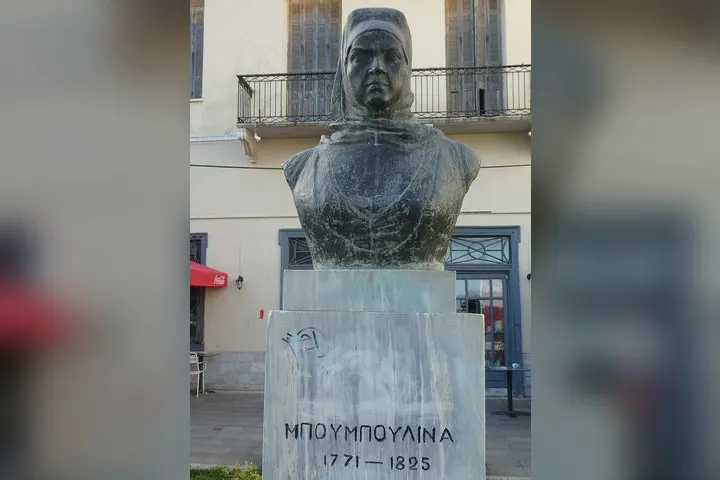 Bouboulina bustAntonis Karachalios's bronze bust of Laskarina Bouboulina, heroine of the 1821 Revolution, in a small square on the waterfront.
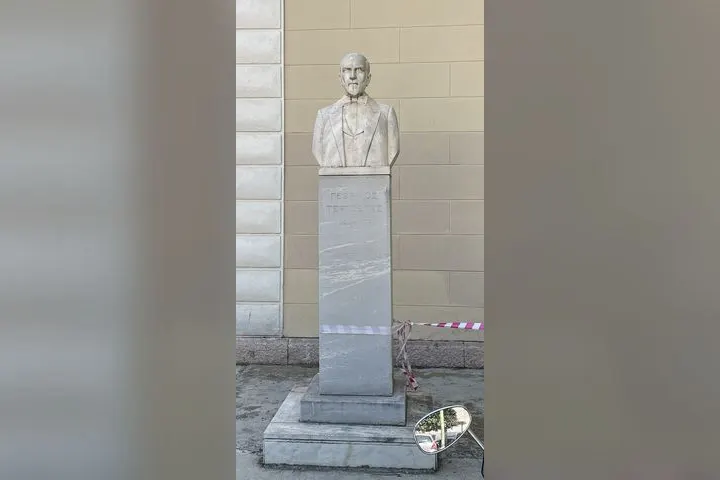 Georgios Tertsetis bustA marble bust of the judge Georgios Tertsetis, who in 1834 refused to sign Kolokotronis's death sentence, at the entrance of the Court House.
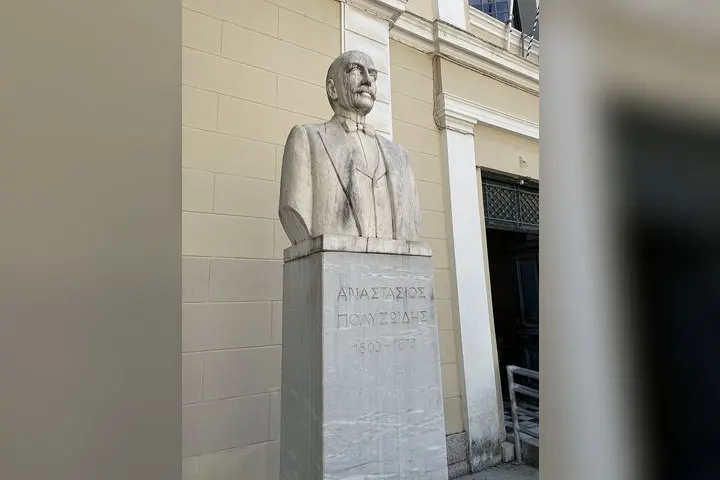 Anastasios Polyzoidis bustA marble bust of Anastasios Polyzoidis, president of the court who in 1834 refused to sign Kolokotronis's death sentence.
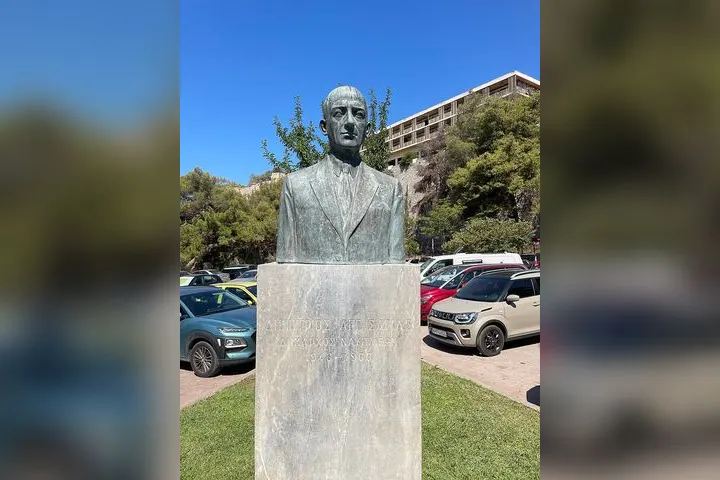 Dimitrios Sagias bustA bronze bust of Dimitrios Sagias, lawyer and writer, who was mayor of Nafplio for twenty years (1946–1966).
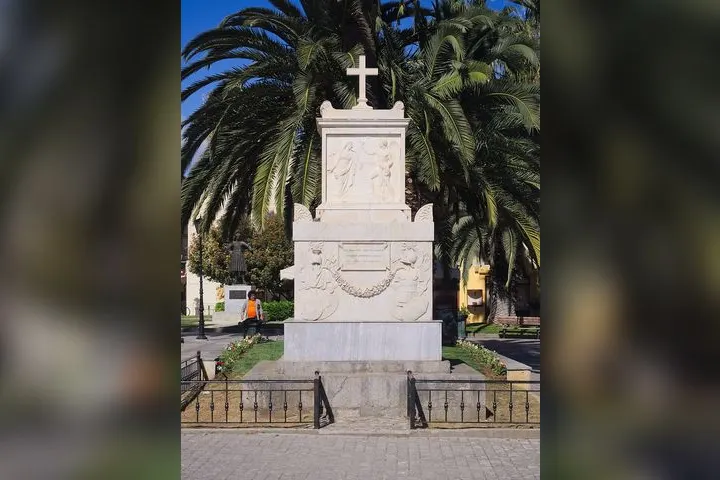 Dimitrios Ypsilantis funerary monumentThe marble funerary monument of Dimitrios Ypsilantis, a leader of the Revolution who died in Nafplio in 1832, in the Three Admirals Square.
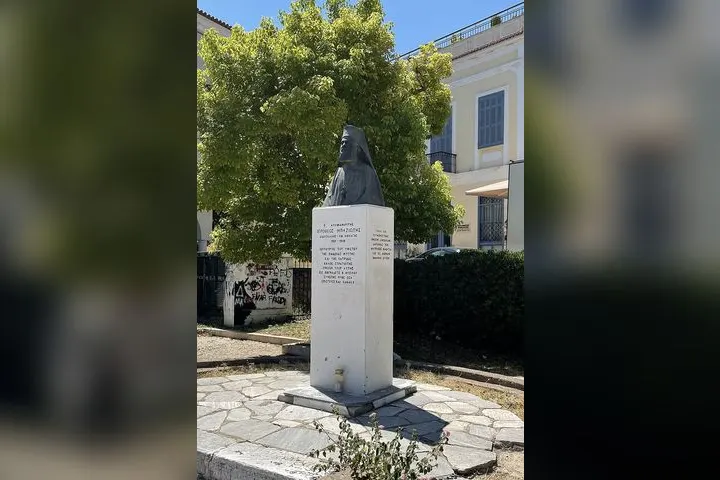 Archimandrite Ierotheos Baziotis bustA bronze bust of Archimandrite Ierotheos Baziotis, priest of Agios Nikolaos and schoolteacher, who was killed at Pogradec on the Albanian front.
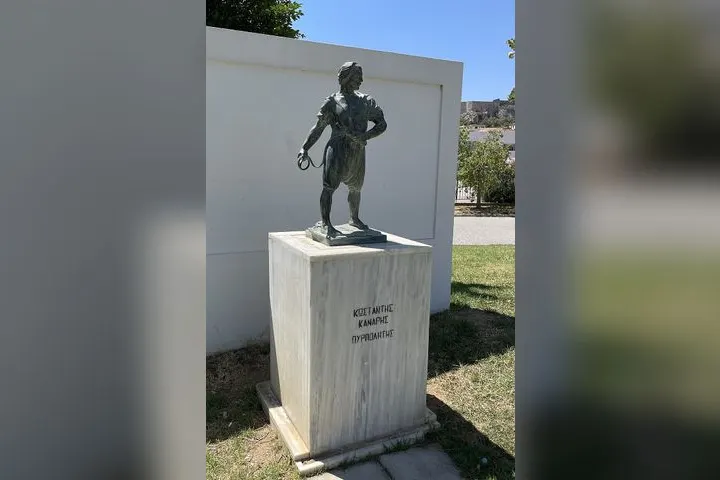 Konstantinos Kanaris statueA small bronze statue of the fireship captain Konstantinos Kanaris by Michalis Tombros, in Aristotelis Onassis Square by the harbour.
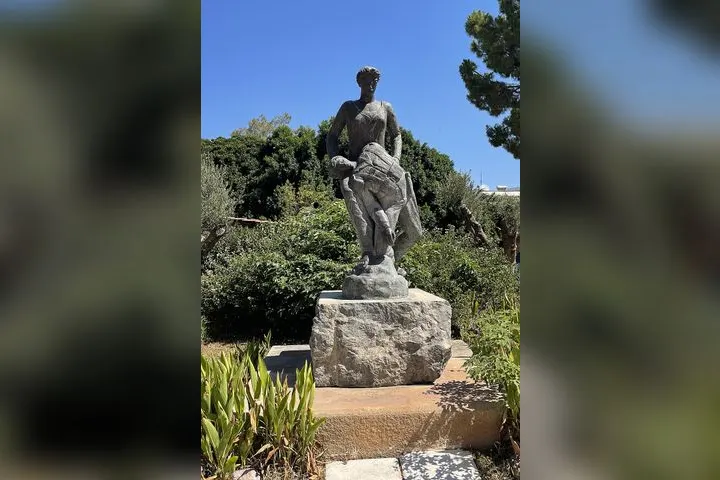 Second World War memorialA bronze group near the old railway station for the dead of the Second World War: a woman holding up a fallen soldier.
- Akronafplia memorialA memorial in the Romeiko castle of Akronafplia, on the site of the old prison, to its inmates executed during the occupation.
- Anastasios Stamatiadis bustA bust of Anastasios Stamatiadis in Pronoia; its inscription calls him a great benefactor of the Nafplio Church Orphanage.
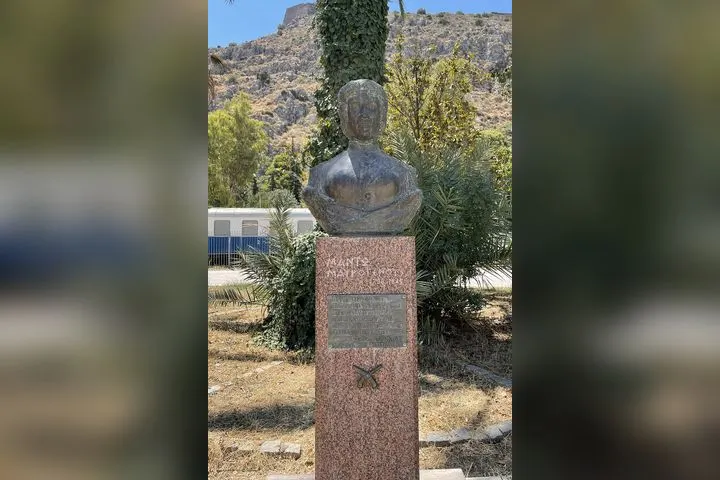 Manto Mavrogenous bustTakis Parlavantzas's bronze bust of Manto Mavrogenous, heroine of the 1821 Revolution, on Vasileos Konstantinou Street by the Railway Park.
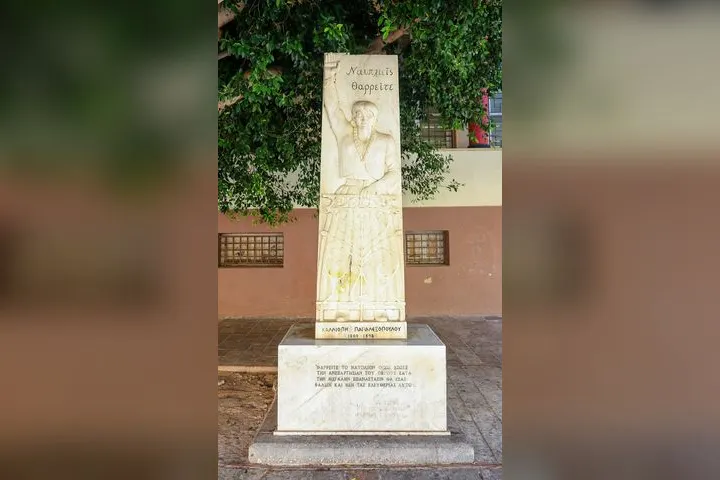 Kalliopi Papalexopoulou memorialA marble stele in Syntagma Square to Kalliopi Papalexopoulou, a driving force of the 1862 revolt against King Otto, by Aliki Chatzi (1990).
Churches
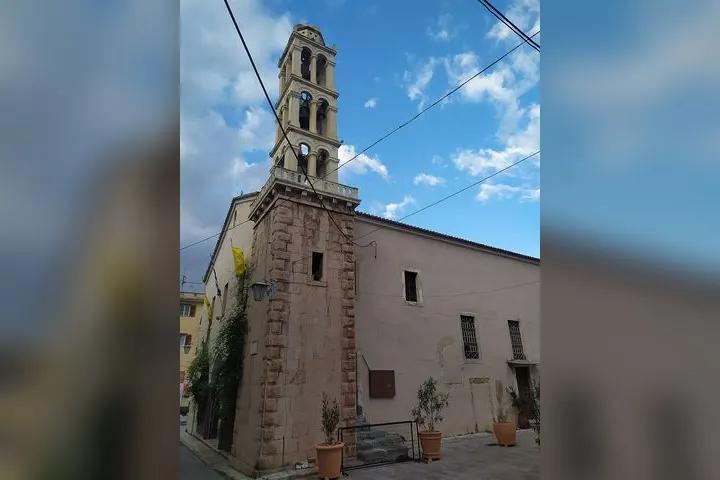 Panagia (Nativity of the Virgin)Three-aisled church of the Nativity of the Virgin, where Nafplio's patron saint, St Anastasios, was martyred in 1655; its tall bell tower dates from 1907.
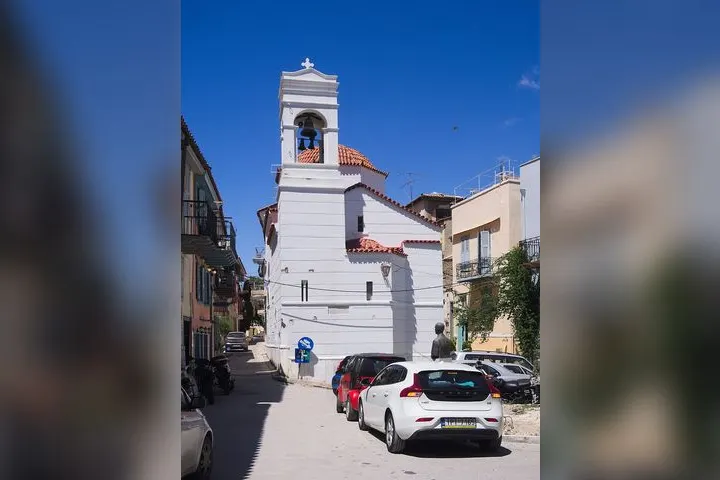 Agios SpyridonPost-Byzantine church at whose door Ioannis Kapodistrias, the first Governor of Greece, was shot dead on 27 September 1831.
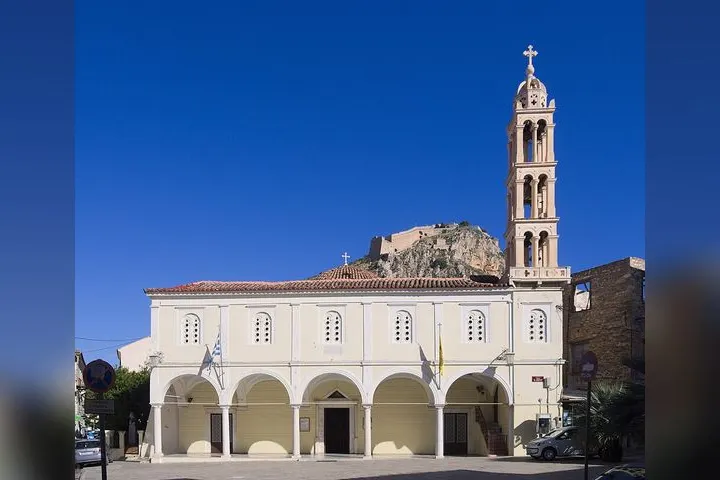 Agios Georgios cathedralNafplio's cathedral: a 16th-century church that twice became a mosque, and where Kapodistrias' funeral and King Otto's welcome took place.
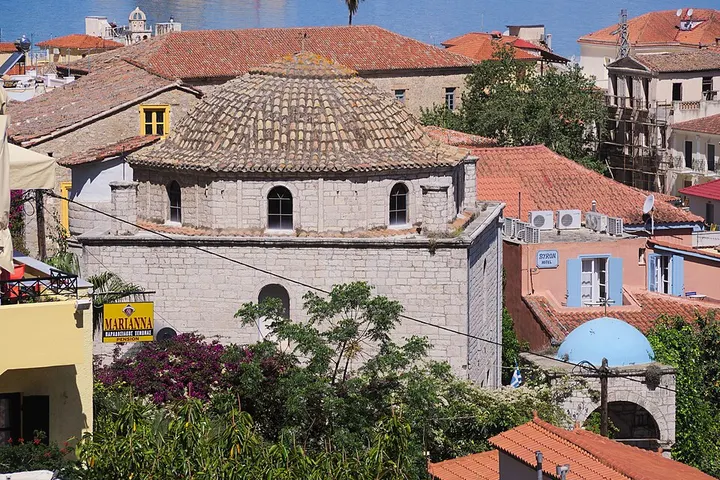 Frangoklissia, Catholic churchFormer Ottoman mosque on the slope of Akronafplia, handed to the Catholics in 1839 and reopened in 1840 as the Church of the Transfiguration.
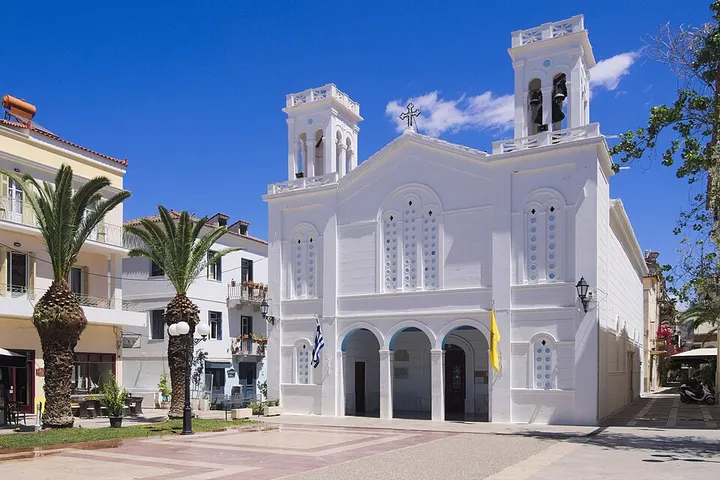 Agios NikolaosThe sailors' church by the harbour, moved outside the walls by the Venetians in 1713; the present church dates from 1836.
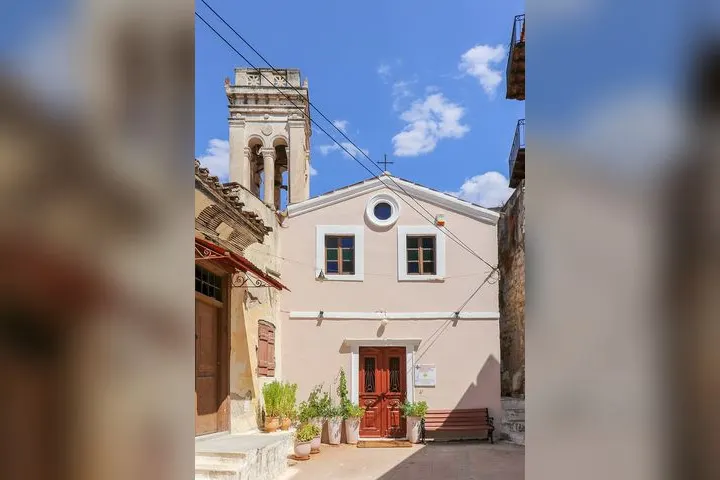 Agia SofiaNafplio's oldest surviving church, a small Byzantine church in Psaromachalas; from 1780 the only church inside the walls where the Orthodox were allowed to worship.
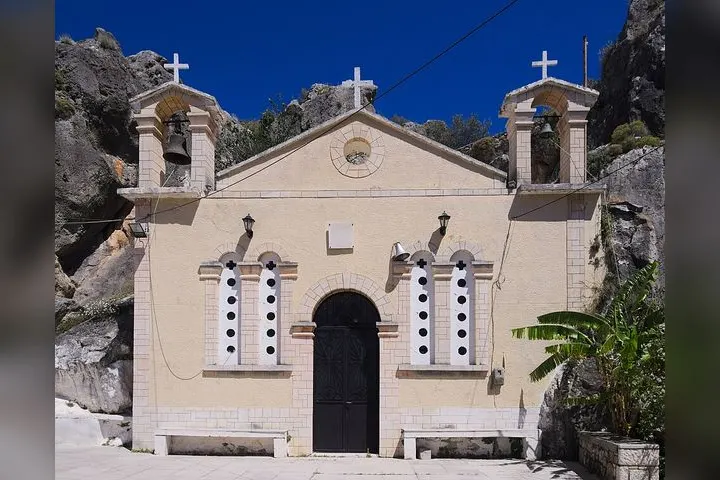 All SaintsSmall church cut into the rock above Pronoia; in the second Ottoman period the only church where Greeks could attend Mass, and the town's first cemetery.
- Agioi AsomatoiChurch of the Archangels in Nafplio's cemetery, laid out in 1852 by the benefactor Michail Iatros; its graves hold fine 19th-century marble sculpture.
- PanagitsaSmall whitewashed chapel of the Virgin on the rock of Akronafplia, above the Arvanitia promenade, linked by tradition to a 'secret school'.
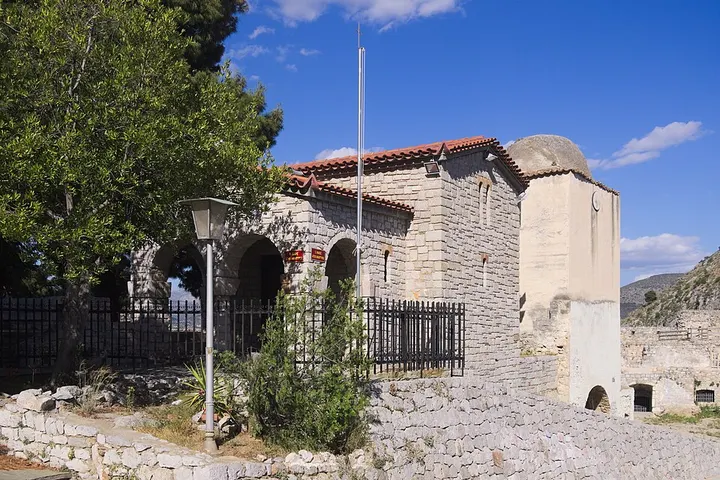 Agioi AnargyroiStone chapel of Saints Kosmas and Damianos on Akronafplia, built in 1828 for Kapodistrias' military hospital; the hospital is gone, the chapel remains.
- Agios Andreas (Palamidi)Venetian chapel of 1712 in Palamidi's central bastion, first dedicated to St Gerard and renamed after St Andrew, on whose feast day in 1822 the Greeks took the fortress.
- Agia TriadaParish church of Pronoia, the refugee suburb founded in 1828; begun with Kapodistrias' support and completed in 1836.
- Agios Ioannis Theologos'Kapodistrias' church', built in 1909 by the barbers' guild on the site of the Governor's country house.
- Agioi Konstantinos and EleniChurch of Neo Vyzantio, the quarter built in 1929 for refugees from Asia Minor, dedicated to Saints Constantine and Helen.
- EvangelistriaHilltop church of the Annunciation above Pronoia, with panoramic views of Nafplio; its feast on 25 March draws thousands of pilgrims.
- Agia ParaskeviTiny chapel of St Paraskevi beside the Amphitryon hotel in the old town, which replaced an older shrine on the hotel site.
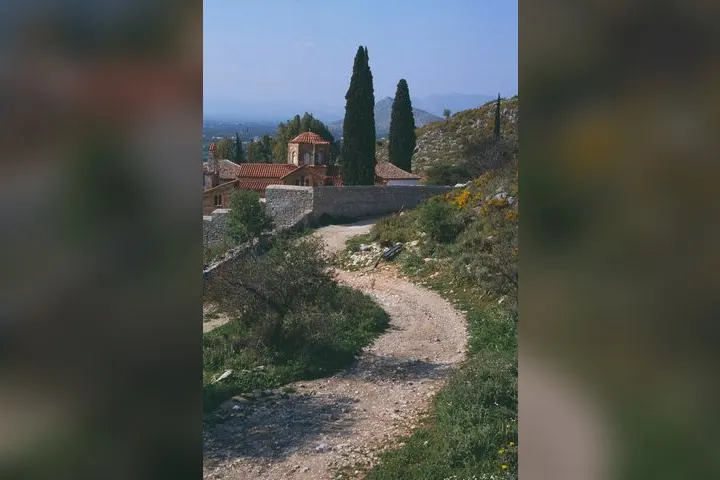 Agia Moni (Areia)Byzantine monastery of 1149 at Areia, east of Nafplio, founded by Leo, bishop of Argos and Nauplia; today a convent of the Life-giving Spring.
- Agios AnastasiosPilgrimage church of St Anastasios, Nafplio's patron saint, at the town's coastal entrance; founded in 1990 and inaugurated in 1995.
Historic buildings
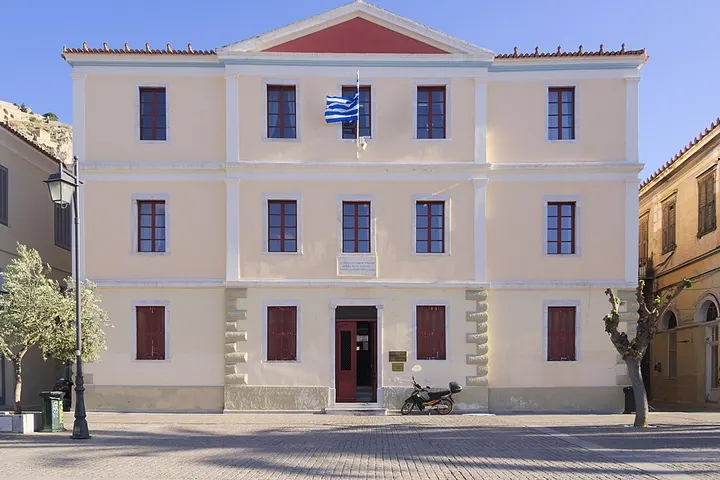 Town Hall (former Gymnasium)An 1857 neoclassical building on Three Admirals' Square, built for Nafplio's Gymnasium, the first of the new Greek state. It has been the town hall since 1992.
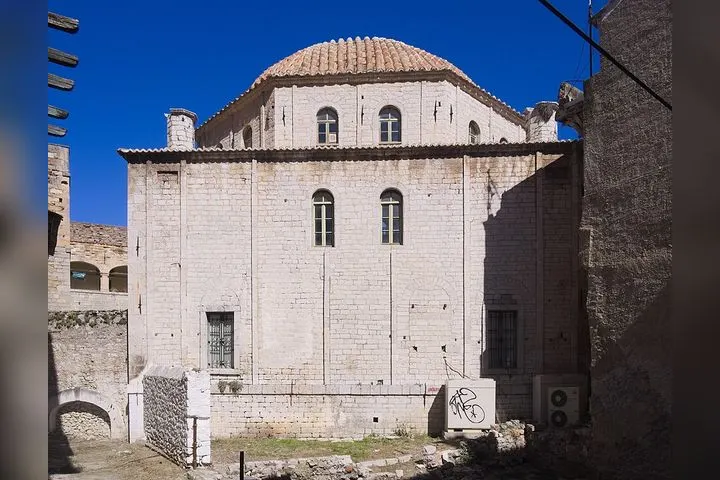 VouleftikoLarge Ottoman mosque where the first Greek Parliament sat in 1825–26, which gave it the name 'Vouleftiko' (parliament house).
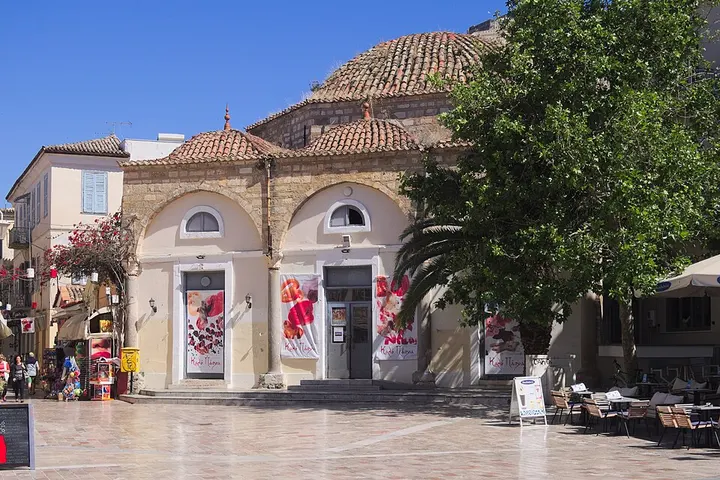 TrianonThe 'Old Mosque' on Syntagma Square, the only surviving building of the first Ottoman period; since then a church, a school, a cinema and now the municipal theatre.
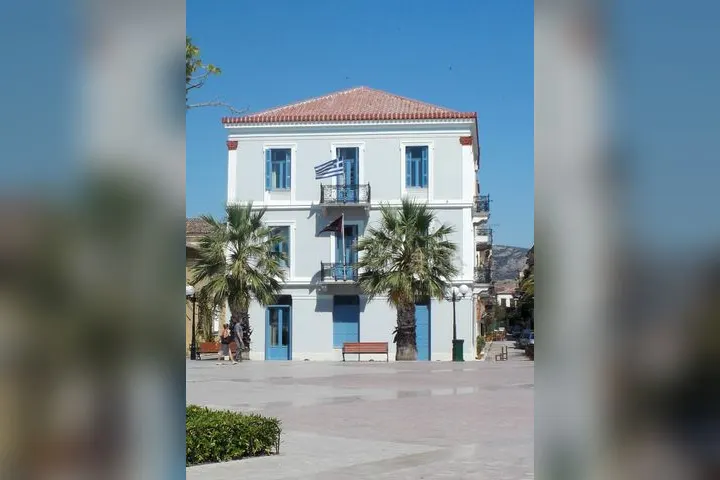 Old Town Hall (Iatrou Mansion)A neoclassical mansion of the Iatrou family on Philhellenes Square, home of the town hall from 1972. It is now Harvard University's Center for Hellenic Studies in Greece.
- First PharmacyThe pharmacy of the Italian philhellene Bonifacio Bonafin, beside the town hall, one of the first organised pharmacies in Greece. Bonafin embalmed the body of Kapodistrias.
- Old Customs HouseA plain neoclassical building with an arcade on the waterfront next to Philhellenes Square, attributed to the architect Stamatios Kleanthis. Restored, it reopened in 2025 as a cultural venue.
- "O Palamidis" LibraryNafplio's public central library, in the neoclassical building of the old girls' school. It keeps the rare books of Greece's first Gymnasium.
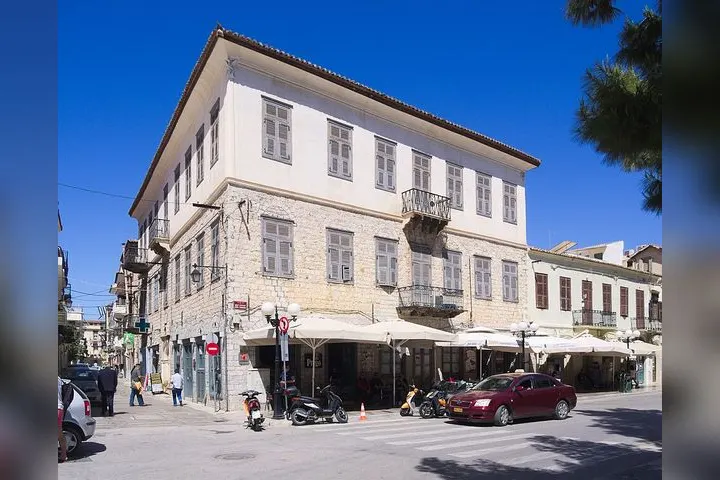 Armansperg MansionOne of the finest mansions of King Otto's time, on the corner of Plapouta and Syngrou Streets. Count Armansperg, head of the regency, lived here in 1833–1834.
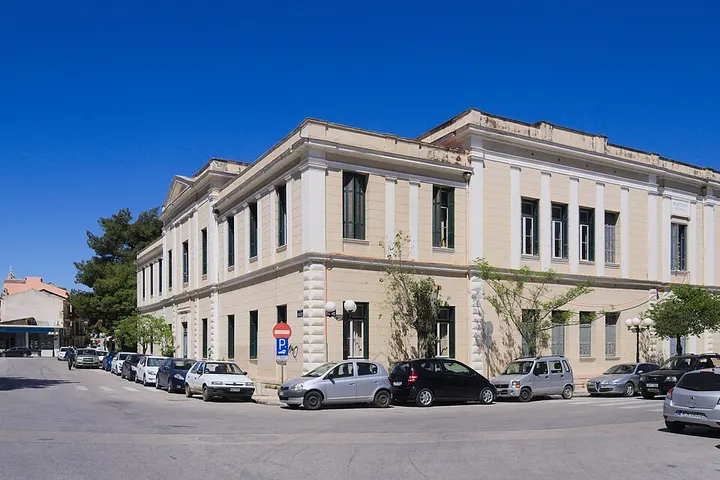 CourthouseA neoclassical courthouse of 1911 on Kapodistrias Square, paid for by the benefactor Andreas Syngros.
Museums
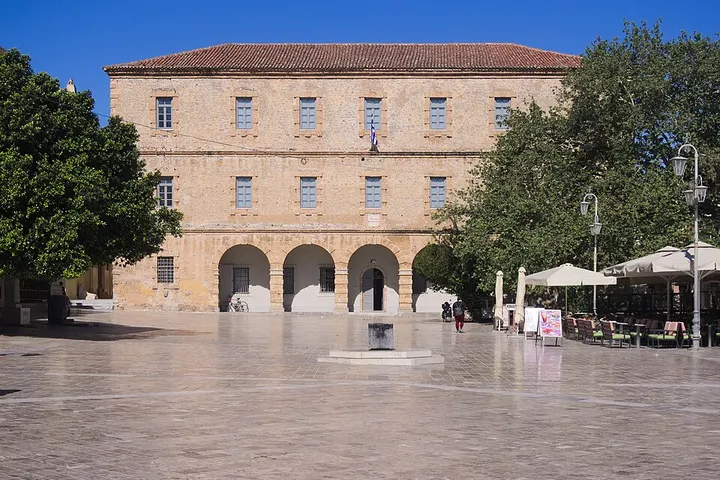 Archaeological MuseumA Venetian naval storehouse of 1713 closing the west side of Syntagma Square. It now holds finds from across the Argolid, from the Palaeolithic to Roman times.
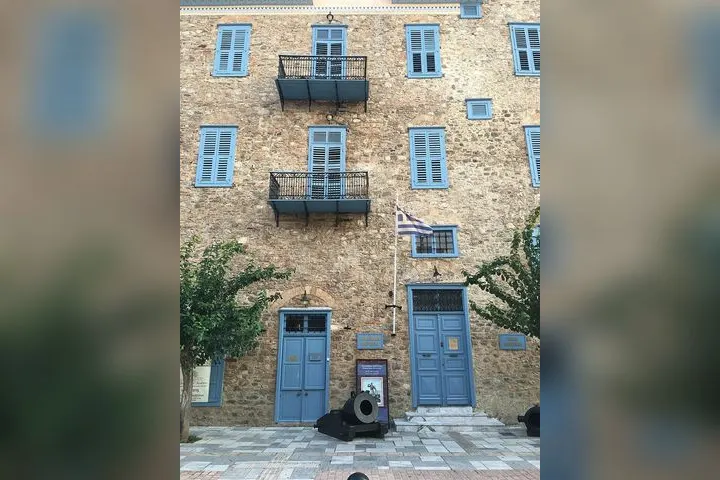 Evelpidon School / War MuseumThe first military academy of the Greek state, founded by Kapodistrias, opened here in 1828. Since 1988 the building has been a branch of the War Museum.
- Peloponnesian Folklore FoundationThe folklore museum of the Vasilis Papantoniou Foundation, in a neoclassical family house. In 1981 it won the European Museum of the Year Award.
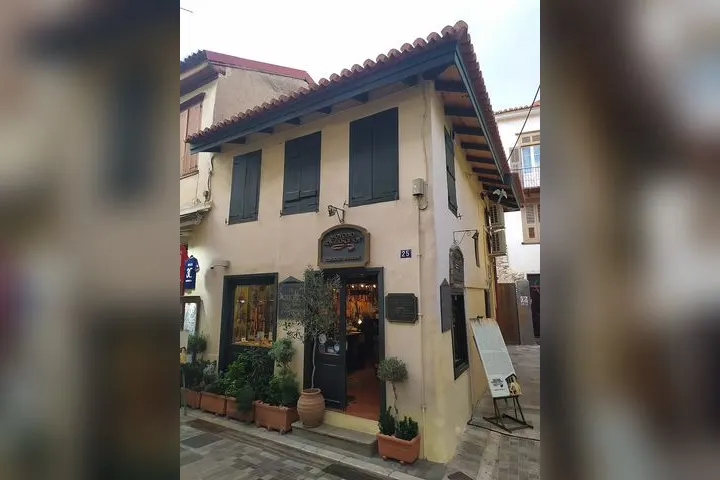 Komboloi MuseumA private museum opened in 1998 on Staikopoulou Street, devoted to the Greek komboloi (worry beads) and to prayer beads from around the world.
- Childhood Museum "Stathmos"Greece's first museum of childhood, opened in 1989 in the old goods shed of Nafplio's railway station.
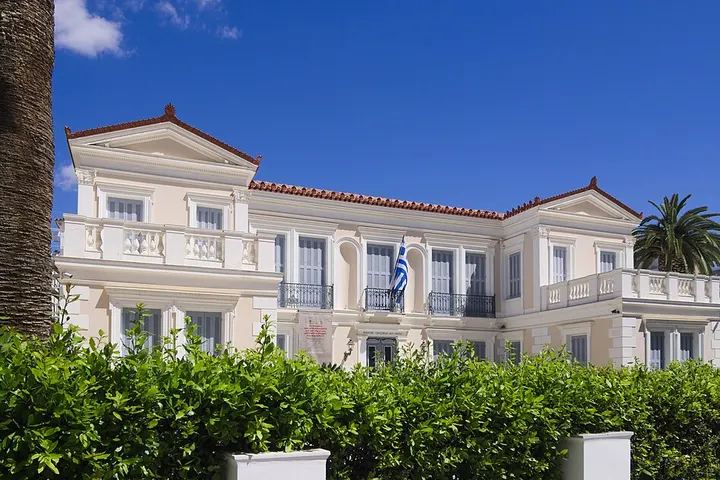 National Gallery, Nafplio AnnexA branch of the National Gallery in a neoclassical building given by the town, showing paintings inspired by the 1821 War of Independence. It opened in 2004.
- FougaroA former tomato cannery, 'Anthos', turned into an arts centre. It takes its name from its tall factory chimney.
Quarters
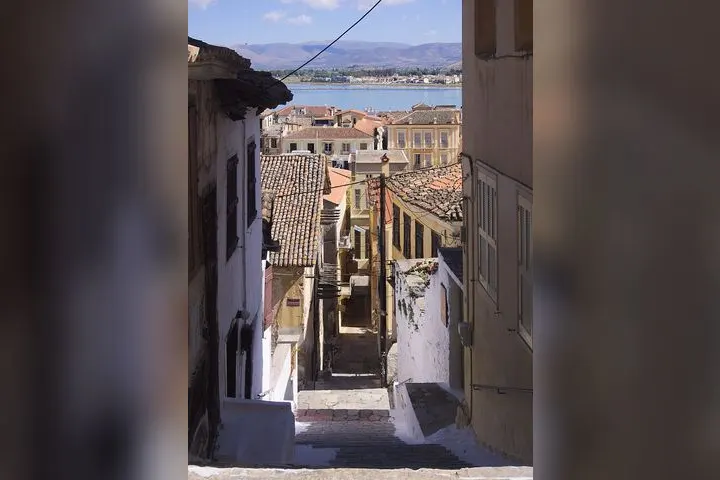 Psaromachalas quarter
Harbour and railway
- LighthouseA small metal lighthouse at the end of Akti Miaouli, facing Bourtzi. It marks the entrance to the harbour.
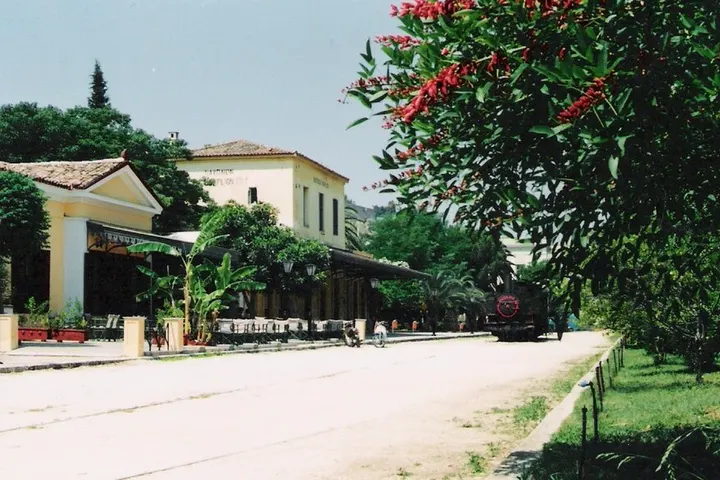 Railway StationThe old station of the metre-gauge railway, built in 1885 where the old town meets the new. It now houses the municipal music school.
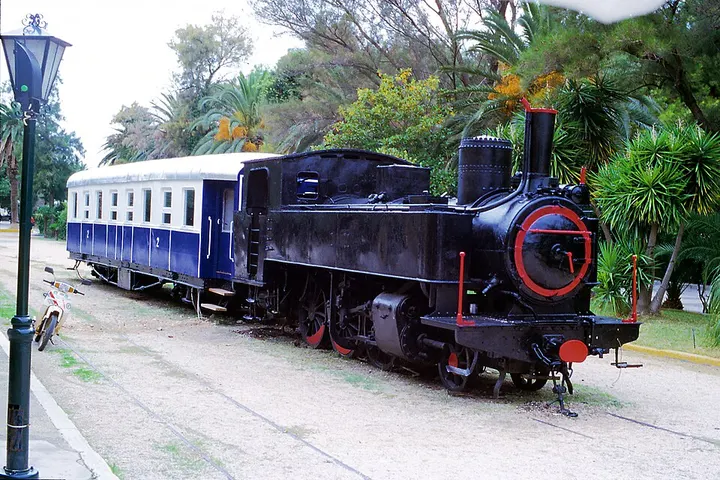 Railway ParkThe grounds of the old station, with pines, tracks, old carriages and a steam engine. It lies on land the Ottomans reclaimed from the sea around 1720.
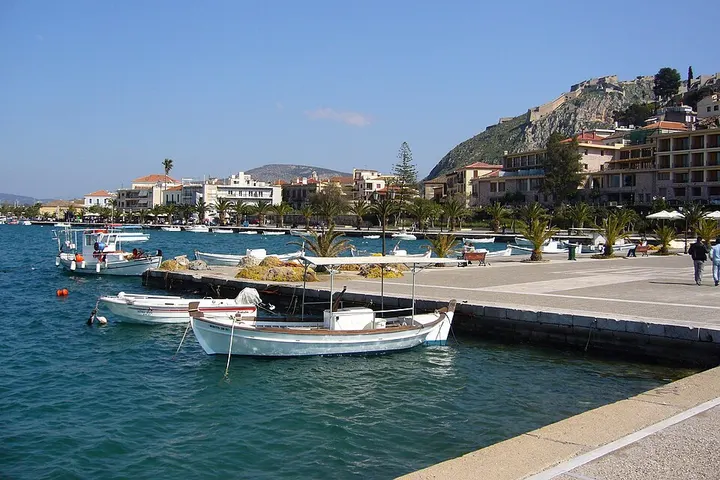 Akti Miaouli waterfrontNafplio's harbour front facing the Bourtzi, built on land won from the sea after the seaward walls came down.
Beaches
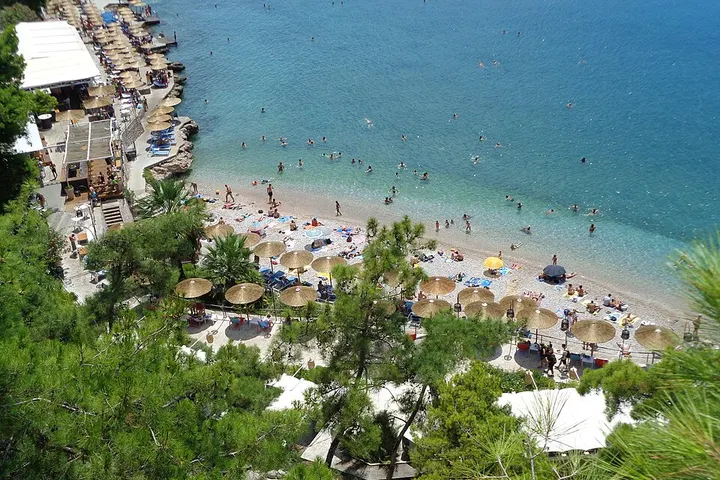 Arvanitia beach
Hotels
- Nafplia Palace (former Xenia Palace)The state tourism board's 'Xenia Palace' hotel on the Venetian walls of Akronafplia, looking out to Bourtzi. Leased out in 2000, it now runs as the Nafplia Palace.
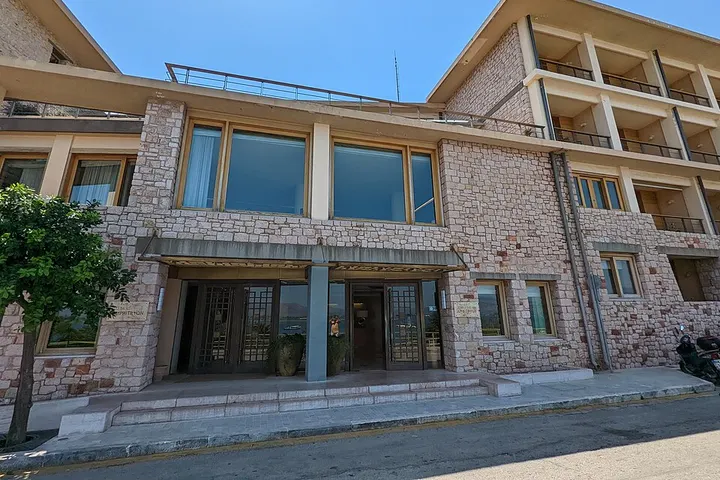 AmphitryonA 1950s hotel of the state tourism board on the waterfront below Akronafplia. It was once the centre of Nafplio's social life.
Sport
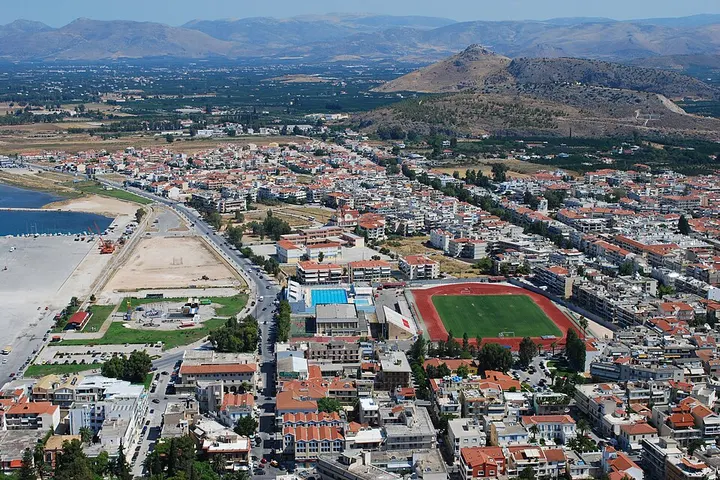 Municipal stadiumThe town's main stadium (the Nafplio Municipal Sports Centre), with a football pitch and a tartan track, home of the historic club Pannafpliakos.
- Municipal swimming pool 'K. Gkouveris'An open-air municipal pool with a main pool and a children's pool, in the sports complex next to the stadium.
- Indoor sports hallThe town's municipal indoor hall for basketball, volleyball and handball, in the sports complex beside the stadium.